


How Pole Kiosk Advertising Works in High-Car-Density Neighbourhoods
Executive Summary:
- Client: Infinity Cars (Authorized BMW Dealer)
- Industry: Luxury Automotive
- Campaign Type: Pole Kiosk Advertising
- Location: South Mumbai
- Objective: Reach premium vehicle owners through route-specific outdoor advertising
- Strategy: Audience mobility analysis + precise site selection
- Result: Successful premium OOH campaign with verified installation and client approval
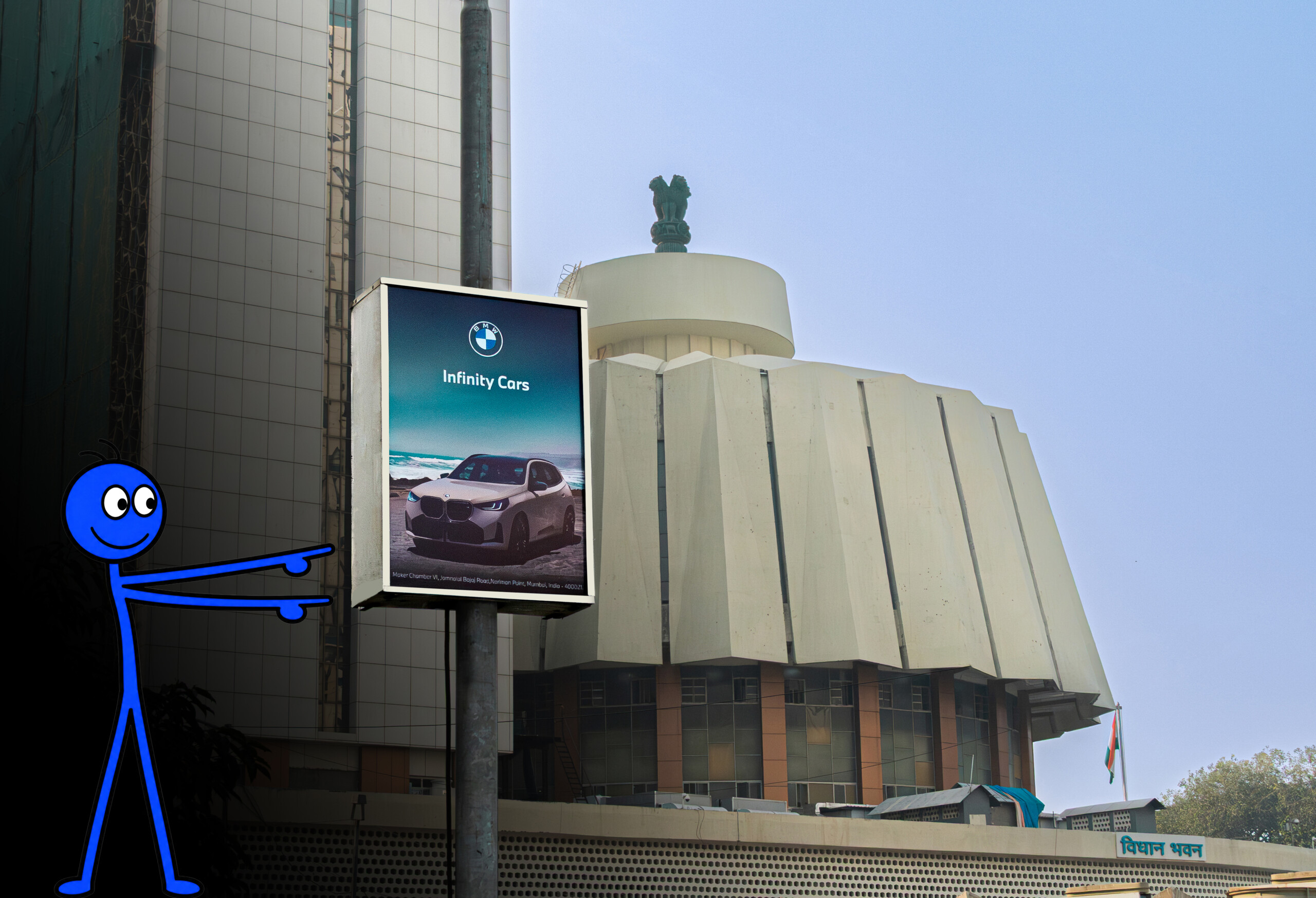
Most outdoor advertising briefs start with a simple goal: reach people who are out and about. But what happens when your target audience is already driving the kind of car you’re trying to sell them?
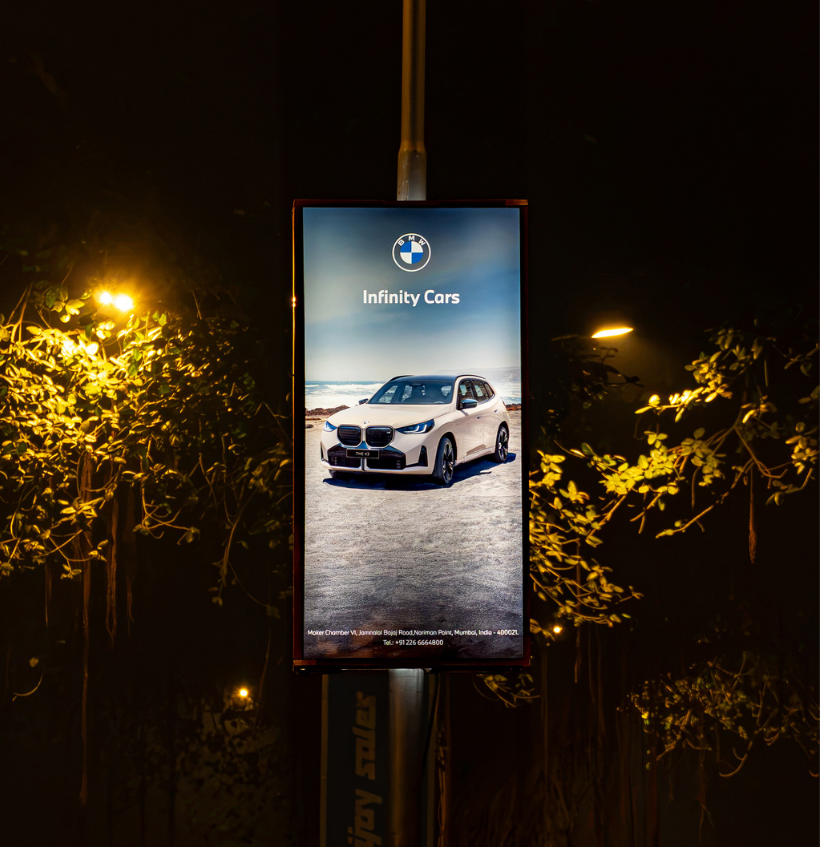
That was the real challenge behind a recent pole-kiosk advertising campaign for Infinity Cars, an authorised BMW dealership, executed across South Mumbai. It’s a case study less about big billboards and more about the unglamorous, detail-heavy work of getting outdoor media site selection right- the part of OOH advertising that rarely makes it into case studies but is usually the difference between a campaign that gets noticed and one that blends into the background.
What this case study says aboutA OOH
site selection
- Audience movement matters as much as footfall. A pole kiosk should be planned differently depending on whether people are walking, driving, or doing both.
- Premium neighborhoods need a different lens than mass-footfall ones. Areas with high private vehicle ownership call for route-level thinking rather than default high-traffic-junction placement.
- Post-installation verification is not optional. Photo-documented, pole-by-pole checks are what separate a campaign that looks good on a media plan from one that actually looks good on the street.
- Direct execution reduces friction. Fewer intermediaries between the client’s brand team and the people physically installing and checking creative usually means faster corrections and fewer surprises.
A long runway to a short campaign
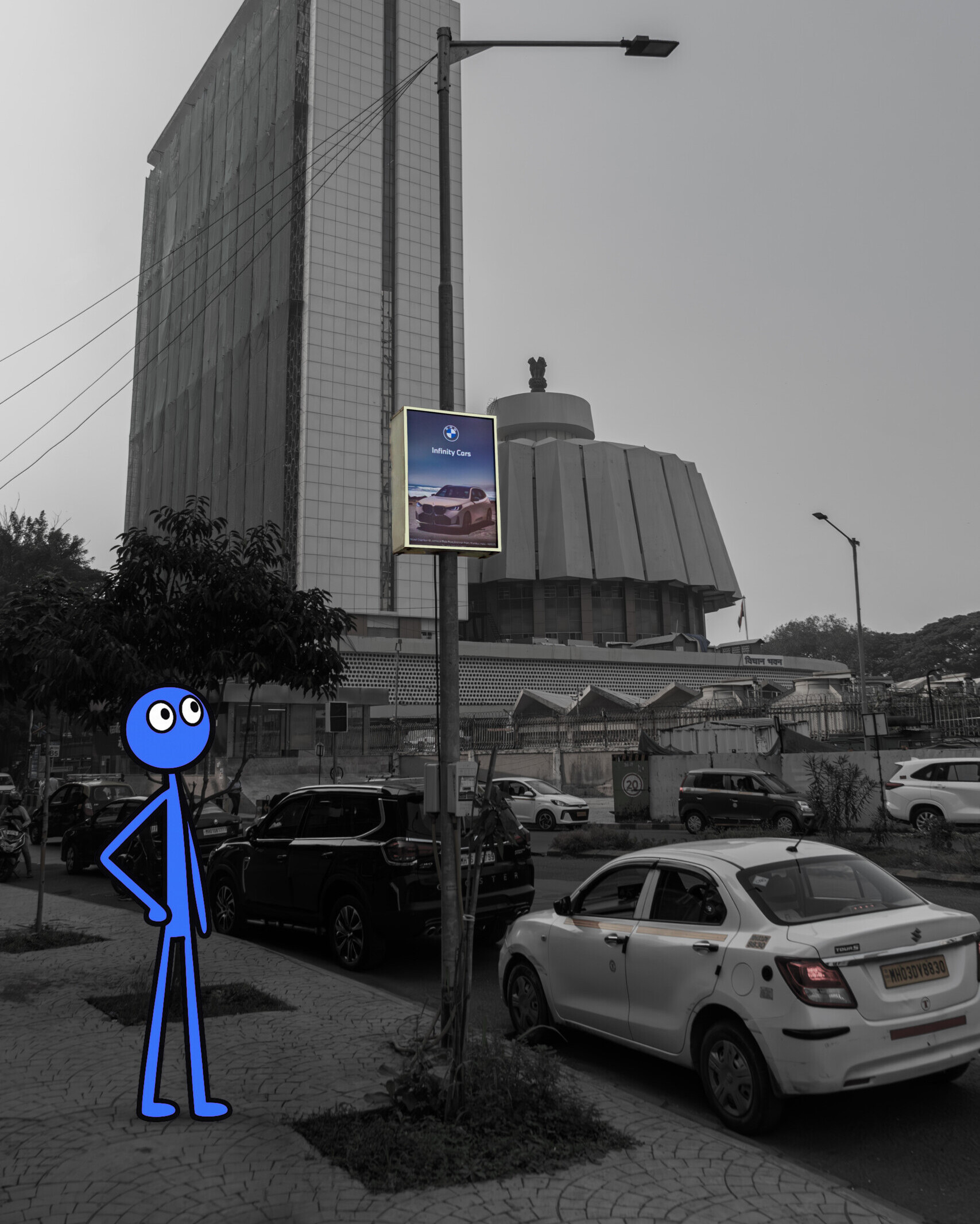
The account didn’t come together overnight. Discussions with the Infinity Cars marketing team ran for several months before a plan was finalized, and even after both sides agreed to move ahead, execution planning alone took over a month. Creative dimensions changed. Preferred pole locations went in and out of availability. Some plans were sent back for revision more than once.
This kind of back-and-forth isn’t a sign of a deal going wrong; it’s fairly typical of premium and luxury automotive accounts, where the marketing team is protective of exactly where and how the brand shows up. For any OOH advertising company working with automotive or luxury clients in India, a long planning cycle should be treated as normal, not as friction to rush past.
Challenge: Reaching Existing Luxury Car Owners
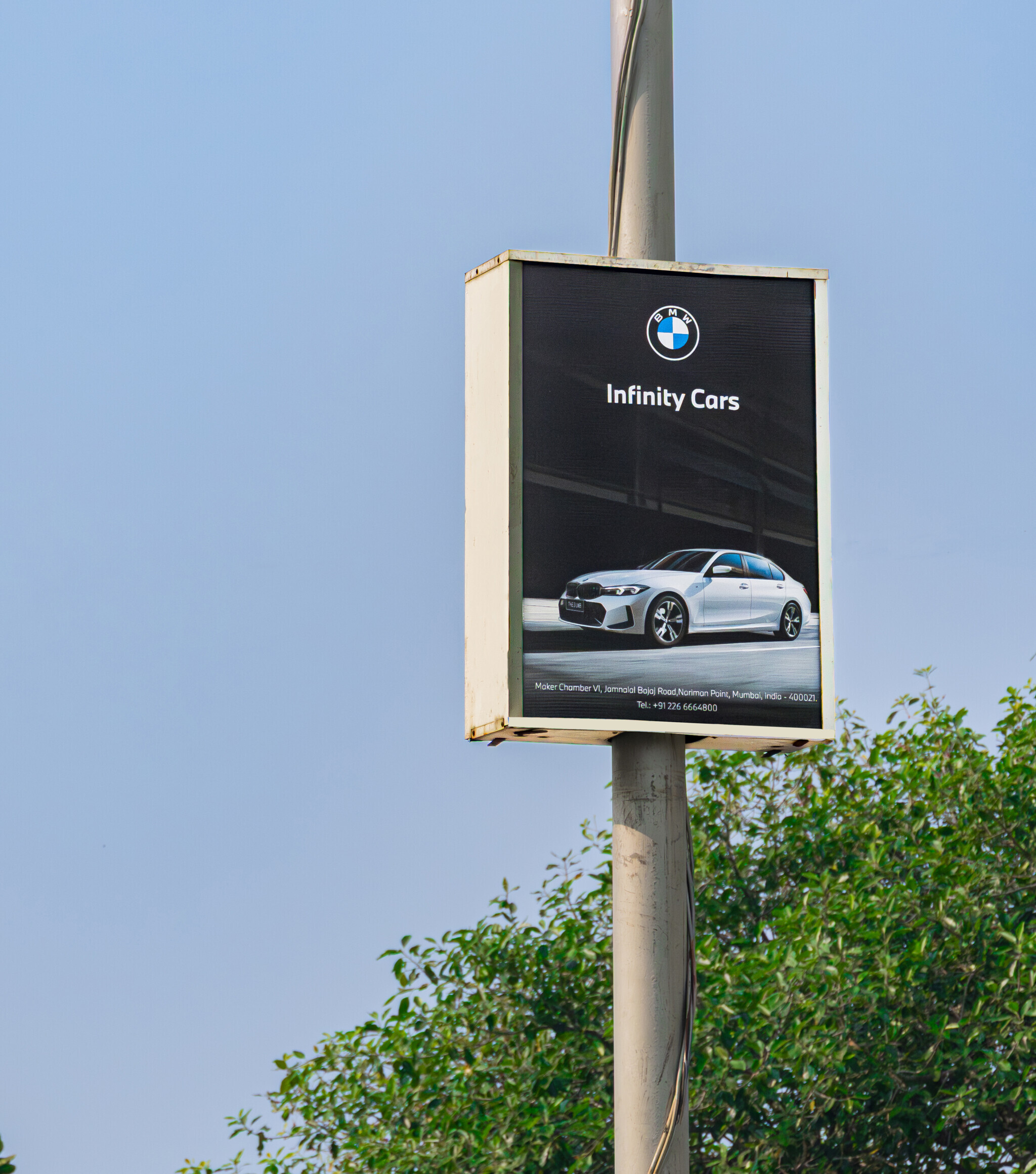
South Mumbai presented a specific targeting problem. It’s one of the most premium residential and commercial belts in the city, with an unusually high density of expensive personal vehicles already on the road. Unlike a suburb such as Andheri, where a large share of daily commuters use public transport, South Mumbai’s audience is largely already mobile in cars, which means a standard “catch the commuter’s eye” approach doesn’t automatically work for an automobile brand.
The insight that shaped the media plan came from a simple question put to the marketing head: which specific route, and which exact stretch, mattered most for visibility? The answer pointed toward locations that worked on two levels at once, a comfortable walking distance for pedestrians in the area, and a clear, unobstructed sightline for anyone passing by in a vehicle. Pole kiosk advertising, by nature of its scale and frequency along a street, was well suited to this dual requirement in a way a single large-format site wouldn’t have been.
Campaign Execution and Quality Assurance
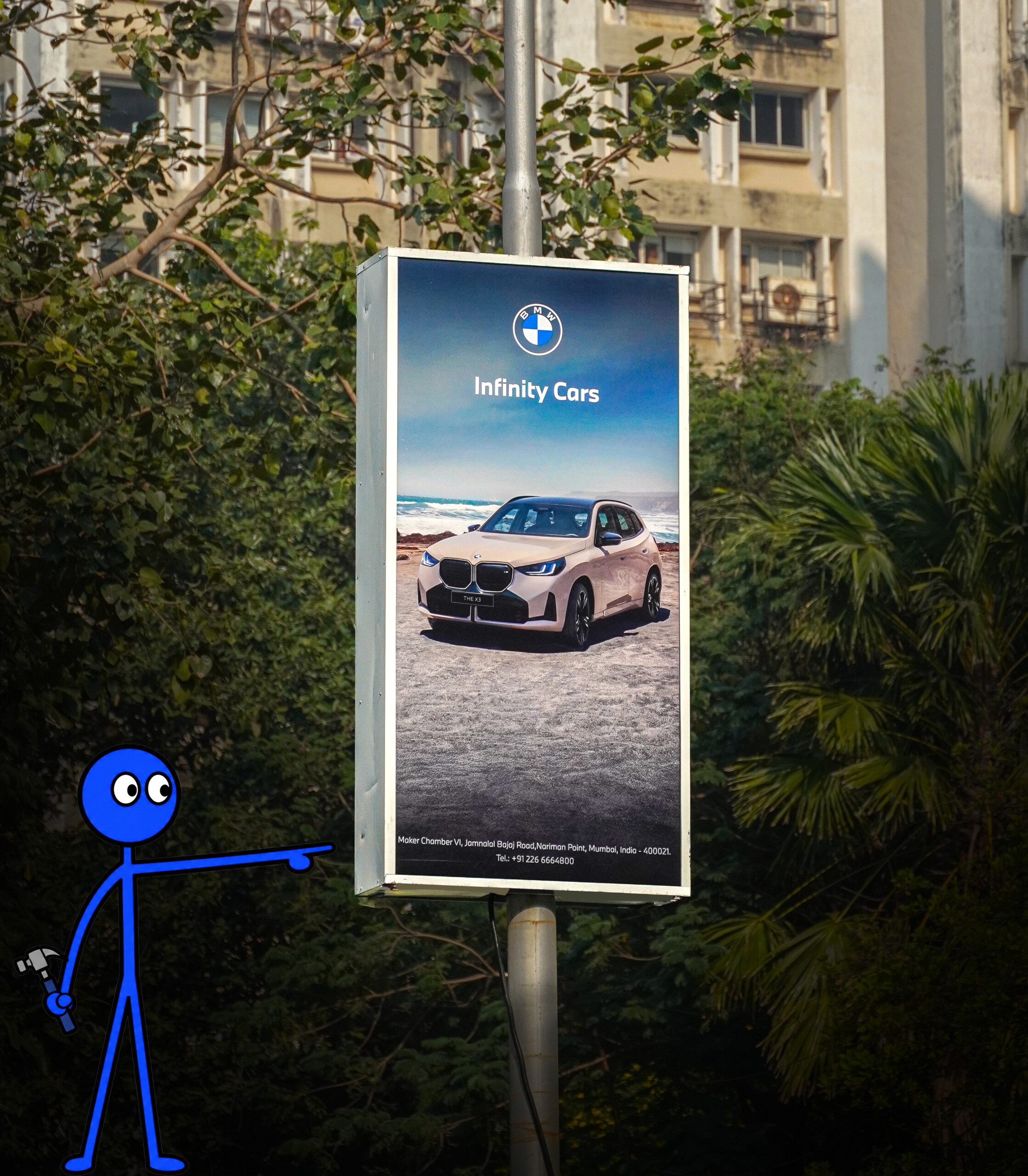
Once locations were locked, the harder part began. Each pole-kiosk site had to be checked in person for correct alignment, correct creative placement on the correct pole, and confirmation that installation matched what had been approved. As execution progressed, the team tracked what was live, what was pending, and what needed correction, sharing photo documentation with the client at each stage so there were no surprises at handover.
There was no separate creative or planning intermediary involved in this process; site identification, route mapping, and on-ground execution were handled directly between the Proactive and the client’s marketing team. For a brand like BMW, where every touchpoint is expected to reflect a certain standard, that direct line mattered as much as the media plan itself.
Key Takeaways :
- Pole kiosks work best when aligned with audience movement patterns.
- Luxury automotive campaigns require precise site selection.
- Route-level planning is more valuable than generic high-footfall locations.
- Photo-verified execution improves campaign quality.
- Direct collaboration reduces execution errors.
Campaign Results .
The campaign delivered exactly what Infinity Cars needed. Client feedback confirmed that route-based placement worked visibility was precise and results exceeded expectations. It ranks as one of Proactive’s strongest premium automotive campaigns, proving that quality site selection matters more than volume for luxury brands.
For the media owner, hosting BMW signals market credibility and premium execution standards to other high-end brands. The real lesson: in affluent neighbourhoods, the right sites on the right route trump generic high-traffic locations every time.
For brands evaluating pole kiosk advertising in Mumbai or planning outdoor media across other Indian cities, this campaign is a reminder that the strategic value in OOH increasingly lies in precise site selection and disciplined execution, not just in buying visibility at scale.
FAQs
Pole kiosk advertising is an out-of-home (OOH) advertising format that places branded displays on roadside utility poles. It is commonly used to build repeated visibility along high-frequency travel routes.
Infinity Cars selected pole kiosks because South Mumbai contains a high concentration of luxury vehicle owners. Instead of maximizing impressions, the campaign prioritized repeated exposure along premium travel corridors.
Site selection determines whether the intended audience actually sees the campaign. Route alignment, visibility, traffic direction, and audience mobility often influence campaign performance more than the number of advertising locations.
Sources
- Campaign execution data from Proactive
- Client planning discussions with
Infinity Cars
- On-site installation verification
- Campaign photography
- Internal project documentation
Summary
This campaign demonstrates that successful OOH advertising depends less on buying the highest-traffic locations and more on matching media placement with audience behavior. For premium automotive brands, route-level planning, verified execution, and close client collaboration can significantly improve campaign effectiveness. Proactive applied these principles to deliver a pole kiosk campaign tailored to the travel patterns of luxury vehicle owners in South Mumbai.
Proactive is a pan-India out-of-home media solutions company operating pole kiosks, premium gantries, state buses, bus queue shelters, local trains, and Delhi Metro advertising formats across Mumbai, Navi Mumbai, Delhi, and other Indian states.